Research
, Volume: 15( 1)Simulation, Analysis and Design Considerations for Rudimentary Exoskeleton Designs Linked with Space Exploration
- *Correspondence:
- Sourav Karmakar
Department of Mechanical Engineering, Faculty of Engineering, Dayalbagh Educational Institute (Deemed University), Agra, India
E-mail: souravresearch16@gmail.com
Received: December 26, 2024, Manuscript No. TSSE-24-156725; Editor assigned: December 30, 2024, PreQC No. TSSE-24-156725 (PQ); Reviewed: January 14, 2025, QC No. TSSE-24-156725; Revised: February 20, 2026, Manuscript No. TSSE-24-156725 (R); Published: February 27, 2026, DOI: 10.37532/2319-9822.2026.15(1).401.
Citation: Singh A, Londhe S, Kumar A, et al. Simulation, Analysis and Design Considerations for Rudimentary Exoskeleton Designs Linked
with Space Exploration. J Space Explor. 2026.15(1).401.
Abstract
Space exploration presents numerous challenges to human physiology, including muscle atrophy, bone density loss, and cardiovascular deconditioning. To address these issues, exoskeleton suits have emerged as a potential solution to support astronauts during Extravehicular Activities (EVAs) and extended space missions. This paper explores the design considerations and material research involved in developing exoskeleton suits for space exploration, aiming to enhance astronaut safety, mobility, and overall well being. Various methodologies and technologies are investigated, highlighting advancements in materials science, biomechanics, and human factors engineering. By analyzing existing research and ongoing developments, this paper aims to provide insights i nto the potential of exoskeletons to mitigate the adverse effects of s pace travel on astronaut health
Keywords
Exoskeleton suits; Space exploration; Astronaut health; Material research; Biomechanics
Introduction
Space exploration poses unique challenges to the human body due to microgravity conditions, radiation exposure, and confinement in spacecraft. Extended missions to destinations such as Mars require innovative solutions to maintain astronaut health and performance. Exoskeleton suits offer a promising approach to mitigate the physiological effects of space travel by providing mechanical support and enhancing mobility during EVAs and other tasks in space. Humanity's relentless pursuit of exploration has transcended the boundaries of Earth, aiming to unlock the mysteries of celestial bodies like Mars and the Moon. Yet, this quest for cosmic discovery is not without its challenges, requiring a delicate balance of technological innovation and scientific understanding to navigate the harsh environments of space. At the forefront of this endeavour stands the spacesuit, a marvel of modern engineering designed to safeguard astronauts against the unforgiving vacuum and extreme conditions beyond our planet's atmosphere. The evolution of spacesuit technology epitomizes humanity's ingenuity and perseverance in overcoming the formidable challenges posed by space exploration. From the early pioneers of spaceflight to the present-day astronauts, these protective garments have served as indispensable life-support systems, enabling humans to venture into the vast expanse of space and embark on historic journeys of discovery. However, despite their vital role, spacesuits impose significant limitations on astronaut mobility and biomechanics, presenting formidable obstacles for Extravehicular Activities (EVAs) in space. Musculoskeletal injuries, ranging from minor discomfort to debilitating conditions, have emerged as a persistent concern among astronauts during both training and operational missions [1]. Repetitive strain injuries, hand injuries, and discomfort induced by spacesuit components underscore the imperative for innovative solutions to mitigate risks and enhance astronaut well-being [1]. Furthermore, the metabolic demands of locomotion in spacesuits impose substantial physiological burdens on astronauts, limiting the duration and intensity of EVAs. Addressing these challenges requires a multifaceted approach that encompasses insights from biomechanics, materials science, human factors engineering, and astronaut physiology. In this context, the integration of exoskeleton technology with gas-pressurized spacesuits emerges as a promising avenue for enhancing astronaut mobility and reducing metabolic costs during EVAs. Exoskeletons, leveraging advancements in robotics and biomechanics, offer the potential to augment human capabilities by providing powered assistance to the lower body, thereby alleviating the biomechanical constraints imposed by spacesuits. By redistributing mechanical loads, enhancing joint mobility, and reducing muscular effort, exoskeletons hold the promise of transforming the landscape of extraterrestrial exploration, enabling astronauts to traverse lunar or Martian landscapes with greater efficiency and safety. This research paper aims to contribute to the ongoing discourse on spacesuit optimization by proposing a design framework for a lower-body exoskeleton tailored specifically for gas-pressurized spacesuits. Through a comprehensive review of existing literature and computational modelling, this study seeks to elucidate the biomechanical principles underlying exoskeleton-assisted locomotion in space environments. By integrating insights from biomechanics, materials science, and human factors engineering, this research endeavours to inform the development of next-generation spacesuits optimized for efficient and safe extravehicular activities on Mars and the Moon.
Materials and Methods
Compatibility for exoskeleton suits
Biomechanical compatibility: Exoskeleton designs must be biomechanically compatible with the human body to ensure optimal functionality and comfort for astronauts [1]. Factors such as joint range of motion, muscle activation patterns, and ergonomic fit influence the design process.
Weight and mobility: The weight of exoskeleton suits is a critical consideration, as excessive mass can hinder astronaut mobility and exacerbate fatigue [2]. Lightweight materials and minimalist design approaches are essential to maintain agility and reduce energy expenditure during space missions.
Customization and adaptability: Exoskeletons should be customizable to accommodate individual astronaut anthropometry and biomechanics [3]. Adjustable components and modular interfaces facilitate personalized fitting and ensure optimal performance across diverse crew members.
Design considerations for exoskeleton suits
The designed outer lower body wearable exoskeleton for gas pressurized suits worn by astronauts in outer space is a crucial innovation aimed at enhancing extravehicular activities, particularly on low-gravity surfaces such as Mars or the Moon. Gas pressurized suits, while vital for survival in the harsh environment of space, introduce limitations to mobility due to the increased metabolic consumption required for movement. This limitation significantly curtails the exploration potential of astronauts, making it challenging to navigate and explore distant planetary surfaces effectively. The exoskeleton addresses this challenge by providing mechanical assistance to the astronaut's lower body, enabling them to move with greater ease and efficiency. By redistributing the forces exerted by movement, the exoskeleton helps to reduce the metabolic load on the astronaut, allowing them to conserve energy and extend their exploration capabilities.
The exoskeleton is designed with three key joints – the hip, knee, and ankle – each carefully engineered to provide optimal support and flexibility. The hip joint features three degrees of freedom (two passive and one active), allowing for a wide range of motion and adaptability to different movement scenarios. This flexibility is crucial for navigating the uneven and challenging terrain of low-gravity environments. Similarly, the knee joint is designed with one active degree of freedom, providing controlled movement and stability during walking, jumping, or kneeling activities. The ankle joint, with two degrees of freedom (one passive and one active), allows for precise control over foot positioning and orientation, essential for maintaining balance on unstable surfaces. To ensure maximum comfort and functionality, the exoskeleton is designed to be wearable over the gas pressurized suit.
Adjustable lower leg, upper leg, and waist bars enable customization according to the size and shape of the astronaut's lower body. This flexibility ensures a snug and secure fit, minimizing any discomfort or interference during use. Overall, the exoskeleton represents a significant advancement in space exploration technology, providing astronauts with the means to overcome the challenges of mobility in low-gravity environments. With its innovative design and adaptability, the exoskeleton promises to revolutionize extravehicular activities, allowing astronauts to explore distant planetary surfaces with unprecedented ease and efficiency.
Advanced composites: The use of advanced composite materials such as carbon fiber and Kevlar offers high strength-to-weight ratios and durability, making them ideal for exoskeleton components [4]. These materials withstand the harsh conditions of space while minimizing mass and maximizing structural integrity.
Smart fabrics: Smart fabrics embedded with sensors and actuators enable real-time monitoring of astronaut physiology and adaptive support mechanisms [5]. These textiles can adjust stiffness, temperature regulation, and pressure distribution to optimize comfort and performance.
Bioinspired materials: Biomimetic approaches draw inspiration from nature to design materials with properties resembling human tissues and structures [6]. Bioinspired materials enhance wearer comfort, promote natural movement, and reduce the risk of musculoskeletal injuries during prolonged space missions.
Integration of exoskeleton technology in space systems
Human-robot collaboration: Exoskeletons can facilitate human-robot collaboration by augmenting astronaut capabilities and enhancing task efficiency. Integrated control interfaces and shared autonomy enable seamless interaction between astronauts and robotic systems in space.
Telepresence and teleoperation: Exoskeletons equipped with telepresence technologies enable remote operation of robotic assets in hazardous or inaccessible environments. Astronauts can control robotic avatars from a safe distance, extending their reach and capabilities beyond the confines of the spacecraft (Figure 1).
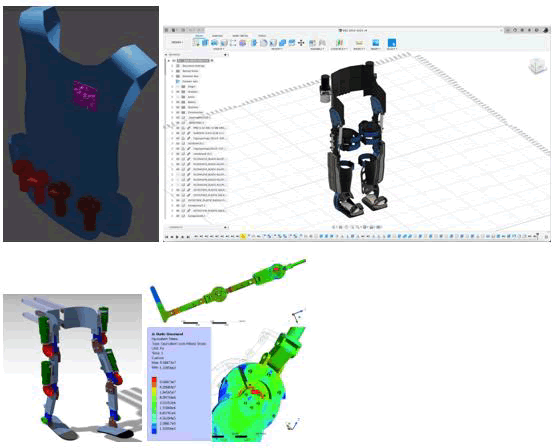
FIG. 1. Sample ANSYS and CAD designs reflecting the state of the systems for exoskeleton structures.
Challenges and limitations
One of the significant challenges in exoskeleton design for space exploration is providing a reliable and lightweight power source. Batteries must be durable, long-lasting, and capable of withstanding extreme temperatures and radiation exposure in space environments.
Exoskeletons designed for use in microgravity conditions must account for altered biomechanics and sensory feedback experienced by astronauts in space. Traditional control algorithms and locomotion strategies may require modification to accommodate the unique physiological responses to weightlessness.
In space vehicles, onboard space and available electric power is very limited. So generally, allocated electric power per actuator is typically low. Because of the high cost of embedded mass, space actuators also need to offer high output energy to mass ratio. Space environmental conditions add other constraints. One of the main difficulties is often the ability to withstand launching vibrations and shocks. Typical level of vibration is often larger than 20 grms, which has to be analyzed with the associated moving masses, to get the external forces. Another difficulty is the vacuum conditions, which can induce difficulties for getting the heating out of the actuator or for outgassing near optics. In some cases, the thermal range is very large because of the change of exposure to the sunlight. It can be typically –150°C to 150°C, but it can be even warmer in case of Mercury or Venus missions, or much colder in deep space missions. The capability to withstand radiation may also be a serious difficulty for some technologies. For all these reasons, space missions are looking for smart actuator solutions. At the opposite of aircraft, hydraulic and pneumatic actuators are not so commonly found in space. One reason is the gas/fluid leakage. Another is the thermal dependency.
Rotary actuators: A rather well-established family of solutions is formed by space qualified rotary Electro Magnetic (EM) motors benefiting from a trend to miniaturization of harmonic drives to get small high precision rotary actuators. For example, a Micro Harmonic Drive offers small size, low weight (<gm) and high repeatability (10 arc sec). A recent application of geared EM motors is given in. Another is an antenna Pointing mechanism for mercury mission, based on a stepper motor designed for working up to 295°C.
Piezoelectric actuators are expending in space applications because it offers direct drive linear motion with a high positioning resolution, a high stiffness and a low power consumption. Typical applications of piezo actuators in space are telescopes, optics and fine instruments positioning. They have passed the vibration tests thanks to some frequency notching and some specific design increasing their pre-stress. The James web telescope would need 4000 actuators. In this case, because of cold temperatures, piezo ceramics operating in cryogenic temperatures are envisaged. Another type of growing application is the active control of vibrations, which can be done using piezo actuated Stewart platforms.
Magnetostrictive actuators are not often considered in space applications. They compete with piezo offering higher displacement per volt but lower output energy per watt. Space qualified SMA actuators are available and used for making locking actuators for passing launching vibrations. Paraffin actuators Paraffin actuators are also space qualified for locking competing with previous SMA. ERF and MRF devices ERF and MRF devices are not today used in space but are considered by JPL for haptic applications for astronauts. EAP actuators EAP actuators, also called artificial muscles, are new actuators supported by NASA. Dielectric types present very large strains (>50%), but the very large required E-field is today a strong practical limitation. Low voltage ionic types offer less strain (1-10%) and could be used for space inflatable structures.
Linear actuators: When linear direct drive is needed, a possible way consists of electromagnetic actuators. Among these, moving coil actuators, also called voice coils or Lorentz actuators offer the advantage of medium strokes (1-10 mm) associated to a high resolution (in the nm range). Cedrat has presented such a space compliant voice coil. Recent applications in space are 2 d.o.f. tilt mechanisms for satellites laser communication. Because of the limitations of the previous linear actuators, new smart actuators are emerging. They include piezoelectric actuators and motors, magnetostrictive actuators, Shape Memory Alloy (SMA), Paraffin actuators, Electro/magneto Rheologic (ERF/MRF) devices and Electro Active Polymers (EAP).
Future directions and opportunities
Future exoskeleton designs may incorporate multi-modal feedback systems to enhance user experience and performance. Integration of haptic, visual, and auditory feedback modalities can improve situational awareness and task coordination during space missions. Advancements in Artificial Intelligence (AI) and Machine Learning (ML) present opportunities to optimize exoskeleton control algorithms and adaptively respond to astronaut needs in real-time. AI-driven exoskeletons can learn from user behavior and environmental cues to provide personalized assistance and predictive maintenance.
As exoskeleton technology advances, ensuring equitable access to these assistive devices becomes crucial. Ethical considerations surrounding distribution, affordability, and inclusivity must be addressed to prevent disparities in access to space resources and opportunities.
Exoskeletons equipped with biometric sensors and communication interfaces raise concerns regarding privacy and autonomy. Clear guidelines and safeguards must be implemented to protect astronaut data and uphold individual autonomy in space missions.
Exoskeleton design should prioritize sustainability by minimizing environmental impact throughout the product life cycle. Sustainable material sourcing, energy-efficient manufacturing processes, and end-of-life recycling strategies contribute to reducing the ecological footprint of exoskeleton technology. The proliferation of space debris poses risks to spacecraft and astronauts during space missions. Exoskeletons should incorporate measures to mitigate collision risks with debris, such as lightweight and flexible materials that can withstand impacts without generating additional debris.
Exoskeleton development for space exploration necessitates collaboration across various disciplines, including aerospace engineering, biomechanics, materials science, and human factors. Interdisciplinary research initiatives facilitate the integration of diverse expertise and perspectives to address complex challenges in exoskeleton design and implementation. Collaboration between academic institutions, government agencies, and private industries accelerates innovation in exoskeleton technology for space applications. Strategic partnerships enable access to specialized resources, funding opportunities, and commercialization pathways, driving the translation of research findings into practical solutions.
Pneumatic and control system design
Pneumatic and control system design at the heart of the control system is an Atmel STK600 development kit processor, and an AT32UC3CO512C 32-bit microcontroller. Each microcontroller controls two actuators on one joint (Figure 2).
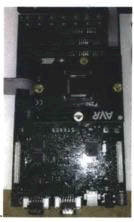
FIG. 2. Sample microcontroller design.
Results and Discussion
The simulation parameters are set using a laptop computer that loads the information into the microcontroller board. The microcontroller sends and receives signals from the breadboard, which is used primarily for signal conditioning. The control system is a proportional controller. The potentiometers provide joint location and filters are used to determine the direction of motion. The position and direction data is then translated into a desired torque based on the EMU suit data. That torque is converted into a desired pressure based on a pressure to torque conversion table supplied by FESTO (Figure 3).
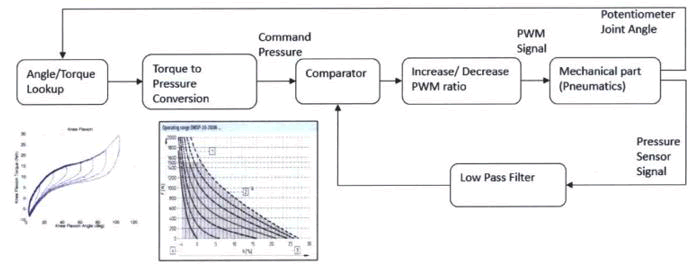
FIG. 3. Sample process flow for exoskeleton system feedback loop design.
That command is then sent to the solenoid valve that adds or releases air from the actuator. A command signal is then sent to a solenoid valve to either input pressure into the actuator from the air source or to exhaust air from the actuator. A pressure sensor provides feedback to the microcontroller on the current pressure level. The pneumatics and control equipment was mounted to an ABS plastic board. Sixteen solenoid valves (one for each actuator) were bolted together in an array and received air pressure from two manifolds. Eight solenoids were attached to each manifold (Figures 4 and 5).
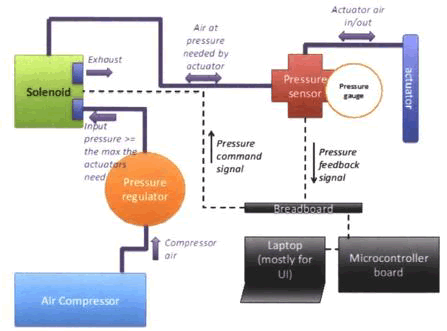
FIG. 4. Actuator process flow systems in relation to control boards and regulators.
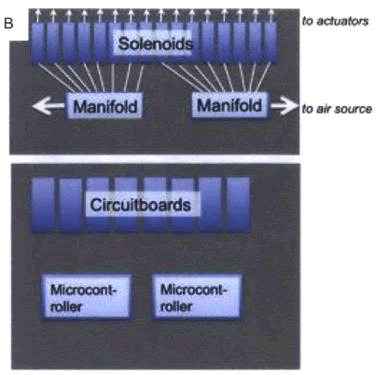
FIG. 5. Solenoids and circuit boards schematics.
Advanced composite materials for space exoskeletons
Carbon fiber reinforced polymers offer exceptional strength-to-weight ratios, making them ideal for space exoskeleton applications where minimizing mass is critical. CFRP exoskeleton components exhibit high stiffness, durability, and resistance to fatigue, enabling reliable performance in the harsh conditions of space.
Aramid fibers such as Kevlar provide excellent impact resistance and tensile strength, making them suitable for reinforcing structural elements in space exoskeletons. Kevlar composites offer enhanced protection against micrometeoroid impacts and debris, safeguarding astronauts during Extravehicular Activities (EVAs) and spacewalks. Glass fiber reinforced polymers offer a cost-effective alternative to carbon and aramid composites for certain exoskeleton components. GFRP materials exhibit good mechanical properties, corrosion resistance, and thermal stability, making them suitable for non-critical structural elements in space exoskeletons.
Hybrid composite materials combine multiple fiber types (e.g., carbon, aramid, glass) to optimize performance characteristics such as strength, stiffness, and impact resistance. By tailoring the composition and layup of hybrid composites, designers can achieve a balance of properties tailored to the specific requirements of space exoskeleton applications.
Nanoengineered composites incorporate nanomaterials such as carbon nanotubes and graphene to enhance mechanical properties and functionality. These advanced materials offer superior strength, conductivity, and thermal stability, opening new possibilities for lightweight and high-performance exoskeleton designs for space exploration.
Exoskeleton review and analysis
Research on exoskeletons, also known as assistive exoskeletons or wearable robots, has been gaining significant attention in recent years. These exoskeletons are designed to assist researchers and scientists in various tasks, improving their efficiency, productivity, and reducing physical strain. One area of research focuses on exoskeletons for laboratory work. These exoskeletons are designed to support the upper body, particularly the arms and shoulders, reducing fatigue and strain during repetitive tasks such as pipetting, mixing, or sample handling. Studies have shown that such exoskeletons can significantly reduce muscle fatigue and improve work quality, leading to increased productivity and reduced risk of musculoskeletal disorders. Another area of research involves exoskeletons for fieldwork and data collection. These exoskeletons are designed to assist researchers in physically demanding tasks, such as carrying heavy equipment or conducting surveys in challenging terrains.
By providing additional strength and support, these exoskeletons can help researchers carry out their work more efficiently and safely, especially in remote or inaccessible locations. Furthermore, there is ongoing research on exoskeletons for healthcare professionals involved in research activities, such as surgeons or rehabilitation specialists. These exoskeletons are designed to reduce physical strain during procedures or patient handling, allowing healthcare professionals to maintain precision and accuracy while minimizing the risk of fatigue-related errors. Researchers are also exploring the use of exoskeletons in the field of Virtual Reality (VR) research. These exoskeletons aim to provide users with a more immersive and realistic VR experience by simulating physical interactions and movements. By incorporating force feedback and motion tracking technologies, these exoskeletons can enhance the sense of presence and improve the overall user experience in VR research. Overall, research on research exoskeletons is still evolving, with ongoing efforts to develop more advanced and specialized exoskeletons for different research domains. These technologies have the potential to revolutionize the way researchers work, improving their safety, productivity, and overall well-being. Research regarding the design specifications of space suit exoskeletons is an active area of study in the field of space exploration.
These exoskeletons, also known as Extravehicular Activity (EVA) assistive devices, are designed to support astronauts during spacewalks or other activities outside of the spacecraft. One key aspect of research in this area is to ensure the exoskeletons provide sufficient mobility and dexterity to astronauts while maintaining a high level of safety. Designers consider factors such as range of motion, joint flexibility, and ease of movement to enable astronauts to perform tasks effectively in the microgravity environment of space.
The exoskeletons should be lightweight and compact to minimize the strain on astronauts and ensure maneuverability in the confined spaces of a spacesuit. Another important aspect of research is the development of exoskeletons that can provide adequate mechanical support and counteract the effects of microgravity on the human body. These exoskeletons may incorporate adjustable mechanisms to apply force or resistance to specific body parts, such as the legs or torso, to simulate the effects of gravity and help mitigate muscle and bone loss during extended space missions. Researchers also explore the use of intelligent control algorithms to adapt the exoskeleton's support based on the astronaut's movements and physiological responses.
Additionally, research focuses on enhancing the overall safety and reliability of space suit exoskeletons. This includes incorporating fail-safe mechanisms, redundancy systems, and advanced sensors to detect and prevent potential hazards or malfunctions. Ergonomics and comfort are also crucial considerations to ensure that astronauts can wear the exoskeletons for extended durations without discomfort or fatigue. Furthermore, researchers are investigating the integration of advanced technologies into space suit exoskeletons. This includes the use of Augmented Reality (AR) displays to provide astronauts with real-time information and guidance during activities, as well as incorporating haptic feedback systems to enhance their sense of touch and spatial awareness. Overall, the research on space suit exoskeletons is aimed at developing advanced and reliable systems that can enhance astronaut mobility, safety, and performance during extravehicular activities. These advancements will be vital for the success of future space missions, including long-duration missions to the Moon, Mars, and beyond.
Control system
In our exoskeleton project, we utilize potentiometers to control a stepper motor, enhancing both power output and efficiency. Potentiometers require minimal force for operation, significantly improving the actuation control of the stepper motor. For the exoskeleton, we employ three PW 1023 model potentiometers. These potentiometers feature a resistance element in the form of a ring and are constructed from anodized aluminum. Each potentiometer is equipped with an IP65-rated housing, ensuring protection against dust and water ingress. The devices support shaft sizes ranging from 6 to 10 mm and use ball-type bearings to facilitate the rotation of the shaft, allowing for a torque capacity of 25 Ncm.
The potentiometers are integral to the precise control of the exoskeleton's movements. By converting the angular position into a corresponding electrical signal, they enable fine-tuned adjustments to the stepper motor's speed and direction. This system ensures smooth and responsive operation, essential for the exoskeleton's performance in assisting human movement.
Technical specifications: Potentiometer model: PW 1023, Material: Anodized aluminum, Resistance element: Ring type, Housing protection: IP65 Shaft, Size range: 6-10 mm, Bearing, Type: Ball bearing, Torque capacity: 25 Ncm
The inclusion of these potentiometers in our exoskeleton design demonstrates a commitment to leveraging advanced control systems for enhanced functionality and user experience. This integration supports the goal of providing a robust, efficient, and user-friendly assistive device. Model-based control systems for exoskeletons can be divided into two main types based on the model used: dynamic models and muscle models. Dynamic models, in comparison, for exoskeletons are derived by modeling the human body as rigid links connected by joints. These models incorporate inertial, gravitational, Coriolis, and centrifugal effects.
There are three primary methods to obtain dynamic models. This involves theoretical modeling based on the physical characteristics of the system. An example is the BLEEX, a 6-DOF lower limb exoskeleton that relies on its dynamic model for user movement without using force/torque sensors. BLEEX has three dynamic models based on walking phases: single support, double support, and double support with redundancy, each with different control mechanisms. System Identification method uses input-output data pairs to estimate the parameters of the dynamic model. For instance, BLEEX researchers used the least square method for swing phase control, and Aguirre-Ollinger et al. employed the recursive least square method for a 1-DOF lower exoskeleton.
Artificial intelligence techniques like wavelet neural networks are used to identify dynamic models. For example, Xiuxia et al., used a wavelet neural network to create an inverse dynamic model for exoskeleton control. Muscle models predict muscle forces based on neural activities and joint kinematics. They can be parametric or non-parametric.
The Hill-based muscle model, consisting of contractile, series, and parallel elements, is used to estimate muscle force based on EMG signals and muscle length. Rosen et al. used this model for a 2-DOF upper-limb exoskeleton, and Cavallaro et al., enhanced it with a genetic algorithm for a 7-DOF exoskeleton.
This model doesn't require detailed muscle and joint dynamics. Kiguchi et al., used a neuro-fuzzy network to adjust the parameters relating EMG signals to joint torque, applied to a 7-DOF upper limb exoskeleton for assisting physically weak individuals. Hierarchy-based control system exoskeleton control systems can also be categorized by their hierarchy into three levels: The task level controller is the highest level, responsible for overall task execution. High-level controllers control the force of human-exoskeleton interaction using information from the task level. The lowest level, directly controlling the position or force of the exoskeleton joints. These hierarchical controllers ensure precise and efficient operation of exoskeletons by addressing different control needs at various levels. The structured approach facilitates a well-coordinated and effective control mechanism, vital for the optimal performance of the exoskeleton.
Conclusion
Exoskeleton suits hold significant potential to address the physiological challenges of space exploration by providing mechanical support, enhancing mobility, and improving astronaut well-being. Continued research and development efforts in materials science, biomechanics, and human factors engineering are essential to optimize exoskeleton design and integration for future space missions.
References
- Jin L, Zhai X, Xue W, et al. Finite element analysis, machine learning, and digital twins for soft robots: state-of-arts and perspectives. Smart Mater Struct. 2025;34(3):033002.
- Ioni?? AR, Anghel DC, Boudouh T. Mind, machine, and meaning: Cognitive ergonomics and adaptive interfaces in the age of Industry 5.0. Appl Sci. 2025;15(14):7703.
- Rosheim ME. Robot evolution: the development of anthrobotics. John Wiley and Sons; 1994.
- Crowell HP, Park JH, Haynes CA, et al. Design, evaluation, and research challenges relevant to exoskeletons and exosuits: A 26-year perspective from the US Army Research Laboratory. IISE Trans Occup Ergon Hum Factors. 2019;7(3-4):199-212.
- Christiansen MP, Larsen PG, Jørgensen RN. Robotic design choice overview using co-simulation and design space exploration. Robotics. 2015;4(4):398-420.
- Hahnemann Y, Weiss M, Bernek M, et al. Advancing biomechanical simulations: A novel pseudo-rigid-body model for flexible beam analysis. Biomechanics. 2024;4(3):566-84.