Research
, Volume: 14( 1)Study on the Correlation between Curved Space and Dark Energy
- *Correspondence:
- Li Yake
Department of Science, Zhejiang University, Zhejiang, China
E-mail: liyk29@163.com
Received: December 04, 2024, Manuscript No. TSPA-24-154177; Editor assigned: December 07, 2024, PreQC No. TSPA-24-154177 (PQ); Reviewed: December 21, 2024, QC No. TSPA-24-154177; Revised: March 04, 2026, Manuscript No. TSPA-24-154177 (R); Published: March 11, 2026, DOI. 10.37532/2320-6756.2026.14(1).452
Citation: Yake L. Study on the Correlation between Curved Space and Dark Energy. J Phys Astron. 2026;14(1):452.
Abstract
The study of dark energy in this article starts with the physical mechanism of curved space. Based on the fact that the speed of light measured in each reference frame is equal, it is found that there is a relative change in the speed of light measured between two reference frames. This phenomenon is caused by the relative expansion or contraction of space and time between reference frames. Therefore, it is concluded that ð??0 ð??0 is the same constant in all reference frames, and is a relative variable between reference frames. Research has found that the continuous relative variation of ð??0 ð??0 in space is the physical mechanism of space time curvature, explaining the physical reason why universal gravity doe s not exist between objects. Research suggests that the macroscopic distribution of ð??0 ð??0 in the universe increases continuously from the inside out, forming a high energy space inside the universe and a low energy space at the edges. The acceleration and expansion of the entire universe is the spontaneous acceleration motion of galaxy objects towards low energy space, during this process, the reduced internal energy of the galactic object is converted into the increased kinetic energy of the galactic obje ct, which is the dark energy we are looking for. The phenomenon that the redshift of light in cosmic observations is directly proportional to distance, as well as a new physical explanation for the phenomenon of photon fatigue, all support the idea that ð??0 ð??0 in the universe continuously increases from the inside out.
Keywords
μ0ε0, Speed of light, Curved space, Gravity, Dark energy, Time, Space
Introduction
The hypothesis of the existence of dark energy in the universe arises from the discovery that the expansion of the universe is accelerating, contradicting previous widespread expectations that it would gradually slow down. In 1998, two independent research teams observed the brightness of distant supernovae and their redshift concluding that rather than slowing down, the expansion of the universe was actually accelerating. This outcome suggests the presence of a force propelling the expansion of the universe to accelerate, countering the gravitational pull. This anti-gravity force comes from an unknown form of energy; thus it is called “dark energy”. Current main research directions: 1) Cosmological Constant (Λ). The simplest dark energy model is the cosmological constant Λ, originally proposed by Einstein in his General Relativity equations to support his static universe theory. Despite Einstein's subsequent abandonment, the cosmological constant has been reintegrated into modern cosmological theories to explain dark energy. The cosmological constant is believed to represent a uniform density of energy distributed throughout space, leading to the acceleration of the universe's expansion. 2) In addition to the cosmological constant, several other dark energy models have been proposed, including the Quark Field model. The Quark Field is a dynamic field whose energy density changes with time. These models attempt to explain that dark energy not only exists as a static backdrop in the universe but also that its properties may change over time. 3) To better understand dark energy, several observation projects and experiments are underway or planned. For instance, the Dark Energy Survey (DES) uses observations of large-scale structures to analyze the properties of dark energy. Future observations, such as the Euclid satellite of the European Space Agency, the US Dark Energy Spectrometer (DESI) and the James Webb Space Telescope (JWST), aim to reveal further insights into the nature of dark energy. These endeavors aim for more precise measurements of the universe's large-scale structure, supernovae, and the cosmic microwave background radiation. However, the physical nature of dark energy has so far remained a mystery.
“Gravity” and “anti-gravity” are two sides of the same coin, and the lack of understanding regarding the phenomenon of "gravity" poses a significant obstacle in explaining dark energy. The General Relativity theory holds that “gravity” between objects does not exist, explaining it instead as the Flection timespace phenomenon [1]. The Flection timespace theory has also been verified through experiments. However, General Relativity does not explain the physical mechanism of Flection timespace. Therefore, this paper begins with a study of the physical mechanism of Flection timespace. Once the physical mechanism of Flexion timespace is understood, it becomes simpler to explore the origins of dark energy.
Materials and Methods
Physical mechanism of space warp
The gravitational field generated by an object is actually a theoretical model that describes the attraction force extending from one object through space to another object. Currently, it is believed that the gravitational field is the space warp effect generated by the object in the space. When an object moves through the curved space, it shows the change of motion state in the right-angle space, thereby reflecting the gravitational effect.
Although this concept contradicts the common sense of empirical mechanics, the space warp theory has been a great success. However, where does the energy for an object to accelerate in curved space come from? If this problem is resolved, it could also solve the mystery of the source of dark energy. Since the theory of space warping has proven successful, its mathematical model must have physical properties of space as its material basis. Only by studying the physical mechanism of Flection timespace can the above problems be solved.
Since the mathematical model of Flection timespace must have a material basis, and Flection timespace occurs in vacuum, then the material basis of Flection timespace is vacuum. In other words, vacuum is material, and the mass of an object can alter the physical properties of vacuum, thereby reflecting the physical phenomenon of Flection time space.
Although it is impossible to directly determine the physical cause of object acceleration in a vacuum, passing around a massive object causes the direction of light propagation to be significantly deflected towards the side of the object when passing around a massive object, providing an indirect clue to the physical mechanism of Flection time space. For instance, the gravitational lensing effect and light deflection towards the solar side under the influence of solar mass has been observed, as shown in Figures 1 and 2. As we all know, this phenomenon of light deflection serves as a tangible manifestation of Flexion timespace. Despite the light only deviating by approximately 1.75" when passing through the sun, it remains a significant clue for studying the physical mechanism of Flection time space.
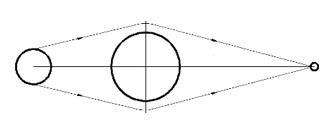
FIG. 1. Geometric configuration of two circular bodies and a reference observation point, illustrating relative spatial alignment and projected boundaries.
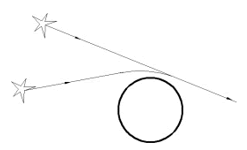
FIG. 2. Radial variation of energy density (μ?ε?) as a function of distance r, showing a nonlinear increase with radius.
As we all know, light is an electromagnetic wave, and it refracts in the direction of propagation due to changes in its speed when the light passes through the space (n21 = c1⁄c2). From the phenomenon of light refraction, it is evident that the closer the light is to the sun, the slower its speed will be. The radar echo delay experiment further confirms this physical phenomenon, showing that light slows down as it approaches the sun. This observation aligns with the fact that the direction of light propagation deflects towards the sun. If light is regarded as a particle with mass, one might anticipate an increase in its speed under the influence of solar gravitation. However, empirical measurements demonstrate the opposite effect, suggesting that this deflection of light is still characteristic of its wave nature [2].
According to electrodynamics, the speed of light c in a vacuum is determined by the vacuum permeability μ0 and the vacuum permittivity ε0:
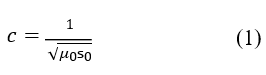
From the above Equation (1), it can be observed that besides μ0ε0, there is no proportional coefficient or constant term that can affect the speed of light. Essentially, the equation leaves no possibility for any other physical factors to directly affect the speed of light. Consequently, the impact of an object's mass on the speed of light can only be realized indirectly by changing the μ0ε0 of the vacuum. In other words, the solar mass only changes the spatial distribution of the vacuum space μ0ε0. The light refraction phenomenon described above indicates that μ0ε0 increases monotonically around objects from distant to near, as depicted in Figure 3. This refraction phenomenon of light serves as a visible external manifestation of this distribution. Since the light deflection phenomenon is the embodiment of space warp, then, could the spatially varying μ0ε0 be the physical mechanism of Flection time space? If this hypothesis is true, it should be able to answer the following three questions: 1) A body in a space where μ0ε0 varies with space is subjected to a force similar to gravity. 2) An object of any mass should experience the same acceleration in it. 3) Time and space exhibit relative expansion or contraction in it. Let's find out if this hypothesis is true.
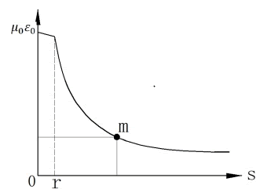
FIG. 3. Ray-like trajectories from two sources interacting with a circular object, demonstrating deflection or field interaction effects.
The mechanical effect of μ0ε0 that varies swithspace
The mass-energy formula of theory of relativity is:

Substitute Formula (1) into the formula above, it can be obtained that:
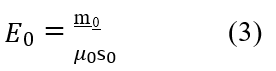
As demonstrated by the Equation (2), the energy of an object is stored in a vacuum, and its internal energy is inversely proportional to μ0ε0. If the object is in a space where μ0ε0 continuously varies, as shown in Figure 4, the internal energy E0 of the object will vary according to its spatial location. Consequently, the object will exist in both high and low energy states within such a space. At this time, in order to minimize its energy state, the object will spontaneously move towards regions of increasing μ0ε0, similar to an electron spontaneously transition from a high energy level to a low energy level. This behavior is a natural property in all objects and embodies the principle of minimum energy. This spontaneous motion of the object can also be understood as the object being under the action of an equivalent force at this time (F=ma). However, this is not an external force, but a spontaneous mechanical effect caused by the spatial change of μ0ε0
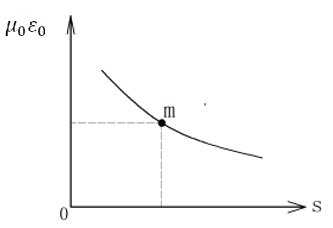
FIG. 4. Time-dependent oscillation of a physical quantity over one second (t=1 s), showing periodic sinusoidal behavior.
The energy minimum principle is a universal law of nature. It states that the energy of an object or system always tends to the minimum value. This principle has been widely applied in physics, chemistry, biology and other fields. This principle is of great significance in understanding and explaining various natural phenomena [3]. The principle of minimum energy provides crucial theoretical support for explaining the spontaneous motion of the above-mentioned bodies.
Now, to prove the mechanical effect of μ0ε0 that varies with space, let the total energy E of a body m be equal to the sum of its internal energy Ei and kinetic enery Ev
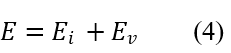
After an object spontaneously moves for a given distance, the change in total energy of the object ΔE is zero because there is no external force.
Change in the total energy of an object:
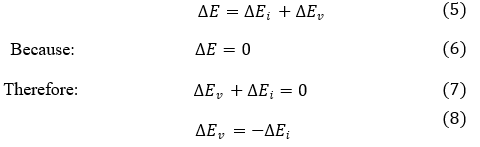
According to the law of conservation of energy, Equation (8) can be obtained. The increase in the object's kinetic energy ΔEv is equal to the decrease in its internal energy−ΔEi. If the increase in the object's kinetic energy ΔEv is equivalent to the work A done by a force Fm over a distance:
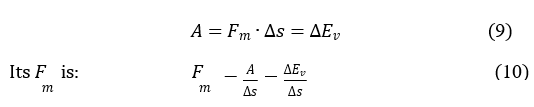
Because the increase in kinetic energy is equal to the decrease in internal energy, Formula (8) is substituted into the formula above to obtain:
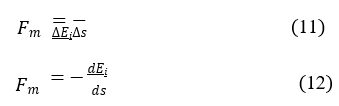
From the above discussion, it is proved that anybody with mass can be acted on by a force Fm in a space with a change in μ0ε0. From Equation (10), it is evident that the equivalent force Fm on the object is equal to the negative gradient of the object's internal energy concerning spatial change. Moreover, the increase in kinetic energy of the object arises from the decrease in its internal energy.
Objects in space varying with μ0ε0 will all obtain the same acceleratin
The following proves that an object of any mass will have the same acceleration in a space with a change of E0
Consider an object m is in a stationary state in this changing scalar field:
Ei=E0
Substitute it into Formula (10):

According to the mass energy formula: E0 = m0c2
Substitute it into Formula (13):

As the object is stationary, its mass is a constant:
Fm= −m0dc2/ds (15)
Set the acceleration experienced by an object under the action of force Fm as g,
Because?
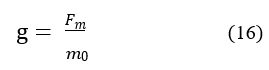
Substitute Formula (15) into Formula (16):
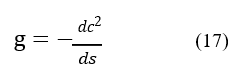
Substitute Formula (1) into the formula above:
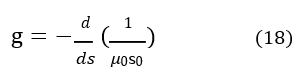
From the above discussion, it can be seen that in a space where μ0ε0 varies, any object's mass will experience the same acceleration. From Equation (18) it is evident that the acceleration g is equal to the reciprocal of μ0ε0 with the change rate of space. In terms of effect, this acceleration g shares similarities with the gravitational acceleration g, but there is an essential difference in a physical sense
It can be seen from Formula that the gravitational acceleration is determined by the rate of change of the square of the light speed with respect to space. To calculate the speed of light mc2, the gravitational acceleration is set as g=10 m/s²; when Δs is 10 meters, C1=299792458 m/s)
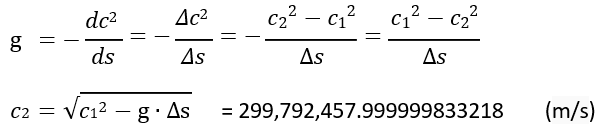
Relative change in the speed of light ?C:
?C=C2-C1= −0.000000166782 (m/s)
Relative rate of change of the speed of light:

From the above calculation results, it is evident that when the acceleration g=10 m/s², within the range of 10 meters, the speed of light only relatively changes by -0.000000166782 (m/s). This change in the speed of light is really insignificant. However, it is this minor change, which may never be measured, that generates the appreciable acceleration g and the “gravitational force” in the macroscopic sens
Results and Discussion
Space warp interacts with gravitational force
Through the above discussion, it has been found that the seemingly transparent and flat vacuum space becomes uneven and even distorted. The physical reason for this warping of the vacuum space is the change in μ0ε0 in the vacuum space. Now the relatively large space of μ0ε0 is called a low-energy space, the relatively small space of μ0ε0 is called a high-energy space, and the uneven transition space between high and low energy spaces is called a curved space, as depicted in Figure 5.
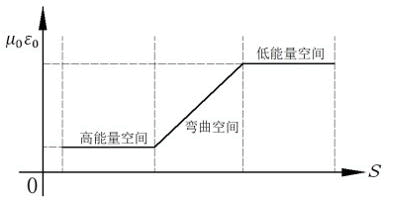
FIG. 5. Decay of μ?ε? with respect to spatial coordinate S, highlighting a rapid initial decrease followed by asymptotic behavior; point m marks a specific state.
When an object is in a space where the μ0ε0 does not change, the change in the internal energy of the object is equal to zero, and the spontaneous force Fm is also equal to zero, then the object will be in a state of relative rest or uniform linear motion. In other words, a space in which μ0ε0 remains constant is an inertial space, while a space in which μ0ε0 changes is a non-inertia proportional relationship between high energy space and low energy space with respect to relative expansion and contraction.
In curved space, an object will spontaneously move in the direction where μ0ε0 increases, that is, towards the lower energy space. This movement of the object is only related to the spatial change of μ0ε0, and is independent of the cause of the spatial change of μ0ε0. Therefore, the possibility of space warp due to physical reasons other than the mass of the object cannot be rule out.
The direct mutual attraction between objects is actually a misunderstanding. The μ0ε0 around an object increases from far to near just because of its mass. As shown in Figure 6, μ0ε0 the movement of mutual aggregation between objects is essentially the spontaneous movement of objects towards lower energy states. Thus, there is no direct mutual attraction between objects.
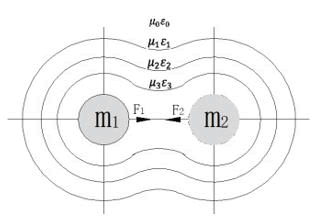
FIG. 6. Field distribution around two masses (m? and m?) with equipotential contours and interaction region between the bodies.
Since the gravitational interaction between objects does not exist, there is no need to address the problem of unifying gravitational interaction and other interactions. Based on the above analysis, the physical cause of “gravity” essentially belongs to the category of electromagnetism.
Dark energy and curved space
Based on the above discussion, we can understand the phenomenon of the accelerating expansion of the universe in the following manner. The macroscopic distribution of μ0ε0 in the universe should exhibit low values within and high values outside, as shown in Figure 7. In other words, the interior of the universe is a high energy space, while its edge is a low energy space. The cosmic acceleration is the spontaneous acceleration of galactic objects from high energy space to low energy space. Objectively, this phenomenon evokes an “anti-gravity” effect [4]. The increase in kinetic energy of the galactic object stems from the decrease in their internal energy. This observation implies that the internal energy converted by galactic objects constitutes the elusive dark energy. Consequently, the focus of dark energy research should prioritize the spatial distribution of μ0ε0 throughout the universe. Furthermore, the discussion in the effect of μ0ε0 on space time indirectly proves the hypothesis that μ0ε0 in the universe is low internally ad high eternally.
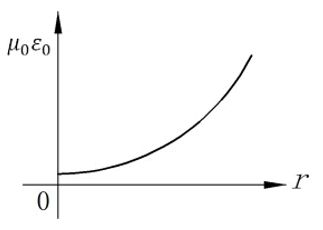
FIG. 7. Inverse relationship between μ?ε? and spatial parameter S, with marked equilibrium point m at the intersection of reference levels.
Now let’s verify the effect of μ0ε0 on time space. It is widely acknowledged that the principle of constant speed of light is derived from the findings of the Mackleson-Morley experiment, and the principle is one of the cornerstones of Einstein’s theory of relativity. The principle of constant speed of light is stated as follows: in any reference frame, the speed at which light travels through a vacuum remains constant and unaffected by the motion of its source. However, as previously mentioned, experiments have revealed another aspect of the speed of light: its relative change when measured indirectly. So how can we explain this seemingly contradictory physical phenomenon?
The computational formula for light speed (c):
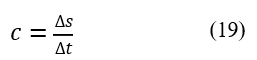
Where, c is the light speed, Δs is the light travel distance, and Δt is the light travel time.
This speed calculation formula is simple, but it is linked to two very important physical quantities, namely space and time. If you multiply the numerator and denominator of the above equation by a scale factor k, the speed of light can still remain unchanged.

Thus, it becomes evident that as long as space and time expand and contract proportionally, the speed of light remains a constant value in any local k value, which satisfies the principle of constant speed of light. In other words, the principle of constant speed of light allows space and time to expand and contract proportionally. However, between two local areas with different scale coefficients, due to the different spatial scale and time process, the speed of light in each other’s local area is different from the speed of light in the local area. This discrepancy is the fundamental reason why the speed of light is absolutely unchanged in any local area and relatively variable in the local area.
Now the relational expression between the proportional coefficient k and μ0μ0 is proved. Let μ0μ0 be the vacuum permeability and dielectric constant of the local vacuum space of A, and μ0bε0b be the vacuum permeability and dielectric constant of the local vacuum space of B with respect to the local space of A. After n seconds in local space A, it is observed that the distance of light propagation in space A is Sa, while in space B is Sb. The relative expansion coefficient k of the two spaces is as follows:
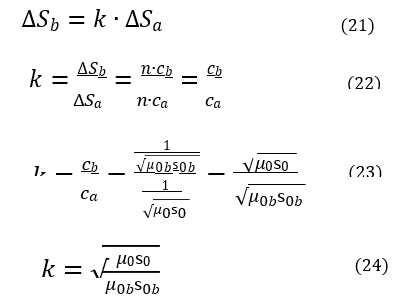
Through Equation (24), the relational expression for the relative space, time expansion and contraction of space A and B can be calculated:

Substituting Equation (25) into the above formula, we obtain:
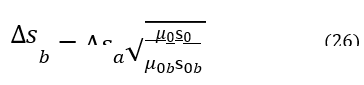
Since the proportional coefficient k for time and space should be equal, we have:
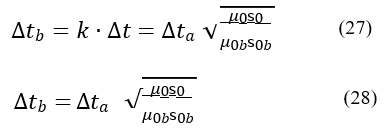
Equations (26) and (29) reveal that μ0ε0 and μ0ε0 respectively determine the space interval and time process in their respective spaces, and the magnitude of spatial intervals is solely relative to the speed of time process. There is no absolute space and absolute time. In a space where μ0ε0 continuously changes, both space and time will undergo continuous relative changes, which is the physical cause of Flection time space.
When μ0ε0, the space and time of the two regos are conistent.
When μ0ε0, the time process in the μ0ε0 area will be relatively slow and the space will be relatively contracted. As mentioned above, the macroscopic distribution of μ0ε0 in the universe tends to be lower internally and higher externally, implying that the interior of the universe constitutes a high-energy space, while its edge represents a low-energy space. Therefore, proximity to the universe's edge correlates with higher values of μ0ε0. According to equation, the clock near the universe's edge ticks slower than the clock within local domains, and the farther from the edge, the slower it ticks. The observed phenomenon where the redshift of light emitted by galaxies increases with their distance, isn't attributed to photon energy loss during propagation, often termed “photon fatigue”. This redshift phenomenon is caused by the fact that the clocks of the farther away galaxies are relatively slower. It is unrelated to the photon itself but rather stems from the contrast in clock rates between the two spaces, as shown in Figure 8. Cosmic observations confirming the phenomenon that light redshift is proportional to distance indirectly support the hypothesis that the μ0ε0 in the universe increases from the inside ot [].
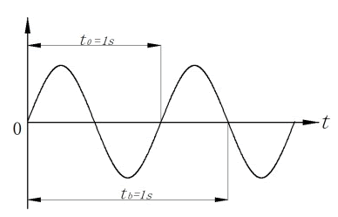
FIG. 8. Piecewise spatial profile of μ?ε? across regions labeled high-energy space, curved space, and low-energy space, showing transitions between regimes.
As you approach the edge of the universe, the value of μ0ε0 increases, causing time process to slow down. Simultaneously, space contraction becomes more pronounced, leading to the apparent shrinkage of observed galaxies, similar to how the sun appears smaller when observed from Earth due to space contraction. As μ0ε0 approaches infinity, time processes approach zero infinitely, and space shrinks to zero. At this point, μ0ε0 creates an invisible spherical space-time barrier. This barrier renders it impossible to observe anything outside this barrier, let alone penetrate this space-time barrier. Therefore, there is no point in discussing what lies beyond the space-time barrier or how big the universe is.
Through the above discussion, it is confirmed that the spatially varying μ0ε0 is the physical mechanism of Flection time space, and also the physical cause of dark energy. One might wonder what μ0ε0 actually does. In essence, starting from Maxwell’s equations, to the principle of constant speed of light, Lorentz transformation, special relativity, and all the way to general relativity, any formula of relativity is intertwined with the physical quantity c of the speed of light [6]. However, the μ0ε0 of vacuum serves as the foundational physical basis of the speed of light, and the success of relativity fully confirms the indispensable role that the physical properties of vacuum μ0ε0 play in the existence and motion of matter. The above is based on the study of the relative change of μ0ε0 in space, which is also an extension and continuation of the study of relativity.
Conclusion
The vacuum is material. The object and the vacuum have an internal relationship of interaction. The object can change the physical properties of the vacuum, and the physical change of the vacuum will also have an impact on the object. The speed of light in vacuum and μ0ε0 are typically regarded as physical constants, experiments and subsequent theoretical analyses have revealed that these constants exhibit relative changes with respect to each other. It is this discovery that certain challenging physical problems have been satisfactorily and simply explained.
The spatial variation of μ0ε0 serves the physical mechanism behind Flection time space, within which objects exhibit high and low energy states. The object will spontaneously move towards the direction of a low energy state, and the increased kinetic energy originates from the object's internal energy. The distribution of μ0ε0 in the universe is low inside and high outside. The accelerated movement of galaxies to the edge of the universe is actually the spontaneous movement of galactic objects towards regions of lower-energy space. This increased kinetic energy comes from the diminished internal energy of these galactic objects. Thus, dark energy is essentially derived from the internal energy of galactic objects. Further quantitative studies on the distribution of μ0ε0 within the universe are necessary to obtain more data to support the hypothesis that dark energy originates from the internal energy of galactic objects.
References
- Balakin AB, Pavón D, Schwarz DJ, et al. Curvature force and dark energy. New J Phys. 2003;5(1):85.
- Acquaviva G, Akarsu Ö, Kat?rc? N, et al. Simple-graduated dark energy and spatial curvature. Phys Rev D. 2021;104(2):023505.
- Santos E. Dark energy as space-time curvature induced by quantum vacuum fluctuations. Astrophys Space Sci. 2011;332(2):423-435.
- Capozziello S, Cardone VF, Troisi A. Dark energy and dark matter as curvature effects? New Astron Rev. 2007;51(3-4):341-345.
- Capozziello S, Cardone VF, Troisi A. Dark energy and dark matter as curvature effects? J Cosmol Astropart Phys. 2006;2006(08):001.
- Gong Y, Zhang YZ. Probing the curvature and dark energy. Phys Rev D. 2005;72(4):043518.